
Tag: a-to-zchallenge.com

  • C is for Call Me by Your Name

    C is for Call Me by Your Name

    I’m doing this Blogging A to Z thing for the month of April 2026. I did this 10 years ago, and it was pretty random. For this month at least, I’m focusing on queer media – movies, books, TV, etc., by, for, or about queer people.

    Call Me by Your Name, based on a novel of the same name, tells the story of a summer romance between 17-year old Elio Perlman, played by Timothee Chalamet in his breakout role, and 24-year old Oliver, who is not given a last name in the book or the movie, played by Armie Hammer. I’ve not read the book, but I understand it’s told in flashback and Oliver not having a last name is a literary device that would make sense to the very erudite characters in the story. I am not that erudite and it just seems like a weird oversight.

    But not as weird as casting someone who looked 35 to play a 24 year old doctoral student. Many people took issue with the seven-year age difference between the lead characters in this film, mostly because the younger character was a minor. Chalamet was 21 when he made the movie, but with his slight build and baby face, he passed easily for 17. Hammer, on the other hand, probably couldn’t have passed for 24 when he was 24. He’s also huge, so they really did look like an adult and child on screen together. It was kinda creepy.

    But not as creepy as Elio’s parents’ reaction to the relationship. They practically set the whole thing up. First they invited a 24-year old stranger to live in their home and encouraged their teenage kid to spend time with him. Then, after they became aware of the relationship, not only did they not kick Oliver out and fire him, they sent Elio and Oliver off on a romantic weekend together. And months later, knowing that he absolutely crushed Elio’s heart, they continued to treat Oliver like one of the family.

    When I saw the movie, there were five people in the theater. We all walked out together chatting about the movie, and all agreed on a few things: the movie dragged until the last 20 minutes, “what the hell was wrong with Elio’s parents?”, “why, exactly am I calling you by my name?”, and that Timothee Chalamet was going to be huge.

    And look at him now – dating a Kardashian, making movies about ping pong, and dissing ballet and opera.

  • B is for Brokeback Mountain

    B is for Brokeback Mountain

    I’m doing this Blogging A to Z thing for the month of April 2026. I did this 10 years ago, and it was pretty random. For this month at least, I’m going to focus on queer media – movies, books, TV, etc., by, for, or about queer people.

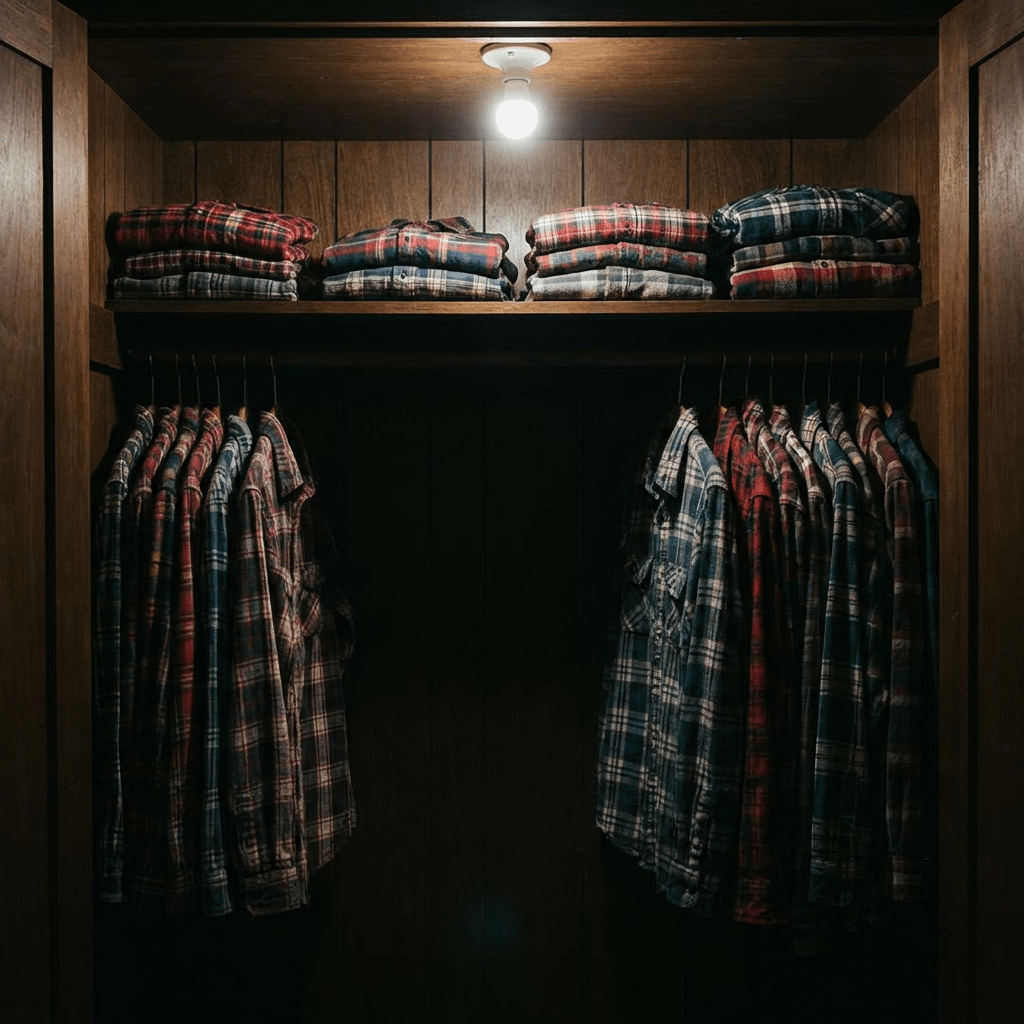
    NoteI’m using AI to generate images. If you’ve seen the movie, you understand the significance of the shirts. I think it’s hilarious how completely WordPress’ AI missed the point.

    One night in the mid 90’s, Pulitzer Prize winning author Annie Proulx observed a middle-aged man watching other men play pool in a bar in Wyoming and began to imagine what life would be like for a typical gay ranch hand. I don’t know how she made the leap from watching someone play pool to gay ranch hand, but here we go…

    60 or so drafts later, her typical gay ranch hands became Ennis Delmar and Jack Twist, two 19-year-old high school dropouts hired to herd sheep on the fictional Brokeback Mountain in 1963. I imagine she set the story in 1963 because by the mid 90’s, even Wyoming had gay bars. The short story appeared in The New Yorker in 1997 and became a movie in 2005 starring Heath Ledger as Ennis and Jake Gyllenhaal as Jack.

    The gist of the story is that Jack and Ennis meet, have a bunch of awkward sex but not much conversation (“… saying not a goddam word except once Ennis said, “I’m not no queer,” and Jack jumped in with “Me neither. A one-shot thing. Nobody’s business but ours.“), and then go their separate ways. Four years later, they reconnect and begin an affair that lasts another 16 years. And then Jack is killed in a hate crime and Ennis is left alone in his grief. And somehow this is seen as an epic romance.

    Unpopular opinion: Ennis deserves the sad and lonely ending.

    I’ll explain.

    In the glimpses we get into their separate lives, Jack ends up in Texas married to Lureen, with a meaningless managerial role in the company she inherits from her father. He cheats on her with both men and women. Not exactly admirable behavior, but the inability to keep his pants on seems to be his major fault.

    Ennis stays in Wyoming, marries Alma, and works a series of dead end jobs. Ennis is an all-around terrible husband. Aside from the relationship with Jack, he’s uncommunicative, short-tempered, and sexually abusive, the last point being weirdly glossed over in both the story and film.

    Throughout their affair, Jack holds out hope that he and Ennis can eventually be together, and Ennis repeatedly stomps on that dream.

    At one point in the story, after Alma finally divorces him, Ennis tells Jack that he’s been “putting the blocks” to a woman who works in a bar he frequents. The movie gives this woman a name, Cassie, and includes a little subplot wherein she and Ennis date for awhile but he ghosts her. When she eventually confronts him, it comes out that he’s no fun and barely speaks.

    So why do people fall in love with this guy?

    The takeaway from Brokeback Mountain is that for gay men in the American West in the 1960s and 1970s, life was miserable, and likely to end in violence or solitude. While there is probably some truth to that, it bothers me that when Annie Proulx imagined life for a typical gay ranch hand, she came up with a dullard with a mean streak and a sad sack who meets a violent death.

  • A is for The Adventures of Priscilla, Queen of the Desert, and…

    A is for The Adventures of Priscilla, Queen of the Desert, and…

    I’m doing this Blogging A to Z thing for the month of April 2026. I did this 10 years ago, and it was pretty random. For this month at least, I’m going to focus on queer media – movies, books, TV, etc., by, for, or about queer people.

    The Adventures of Priscilla, Queen of the Desert is a 1994 Australian movie about three drag queens on a road trip from Sydney to Alice Springs in a silver, then pink tour bus dubbed Priscilla, Queen of the Desert.

    To Wong Foo, Thanks for Everything! Julie Newmar is a 1995 American movie about three drag queens on a road trip from New York to Los Angeles in a yellow Cadillac convertible, who carry with them an autographed photo of Julie Newmar.

    Each film includes an older, established performer who tends to be the adult in the room, a younger, immature, somewhat annoying performer, and…the other guy, who talked the more seasoned performer into allowing the younger one to come along.

    In both films, the vehicle breaks down in the middle of nowhere in a town that seems to be 20 years behind the times, providing an opportunity for the travelers to get to know the locals while they wait for repairs to be made.

    And both films include a scene where one of the drag queens kicks someone’s ass.

    The films were apparently in production at the same time, and the remarkable similarities are just a bizarre coincidence. But despite all the similarities, the movies are actually quite different.

    In Priscilla, the reason for the trip is ostensibly a four-week gig at a resort. We learn along the way that Tick (Hugo Weaving), who organized the trip, is married to the woman who runs the resort and they have a 12-year-old son that Tick doesn’t know. Terence Stamp plays Bernadette, a transgender woman in her 50’s, whose husband has just died, and who feels the need to get out of town for a while. Guy Pearce is Adam, who is new to drag, very campy and loud all the time, and clearly annoys the hell out of Bernadette, who at one point comments that he’s performing all the time.

    While there is a lot of humor and ample opportunities to see the queens performing in truly spectacular drag, the road trip is just a vehicle (pun intended) for a story about three people at turning points in their lives. Bernadette, Tick, and Adam are three vastly different characters that show just some of the variety of queer experiences. The film is loosely based on the lives of three real drag performers who were initially set to play themselves, but the studio wanted more bankable, i.e., straight, stars.

    One negative in an otherwise excellent film is a completely unnecessary subplot portraying a supporting character’s Filipina wife as a crazy, alcoholic, ex-prostitute and stripper. I’m tempted to say it hasn’t aged well, but it’s hard to imagine it was ever not offensive.

    In To Wong Foo, Patrick Swayze’s Vida and Wesley Snipes’ Noxeema, tie for first place in a drag contest in NYC, and are travelling to L.A. for the national contest. John Leguizamo’s Chi-Chi Rodriguez (and yes, the golfer Chi-Chi Rodriguez did sue) tags along. We don’t really get to know the characters beyond that.

    The reason for the photo of Julie Newmar is that it exemplifies the level of glamour they aspire to in their day-to-day lives. And they achieve it. The three stars appear in drag throughout the film, and their outfits are amazing, and other characters believe they’re women, which is absurd. But like Jack Lemmon and Tony Curtis in Some Like it Hot, not at all convincing as women, but we all just agree to suspend disbelief.

    Patrick Swayze, probably because he was a dancer, actually did a pretty good job of embracing the physicality of the role, carrying himself completely differently than he did normally. Wesley Snipes in a dress, though, was just Wesley Snipes in a dress.

    To Wong Foo is not a bad movie. It’s also not a very good movie. It’s fun to watch, but it’s kinda silly, very predictable, and doesn’t have anything to say.

    But on the other hand, it doesn’t include any horrendous racial stereotypes, so there’s that.